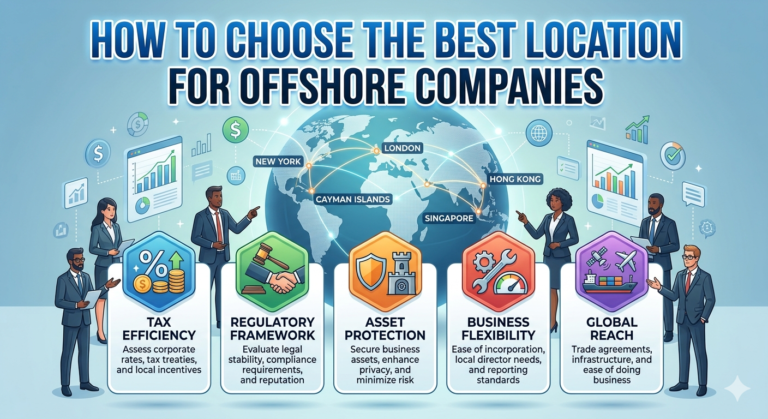


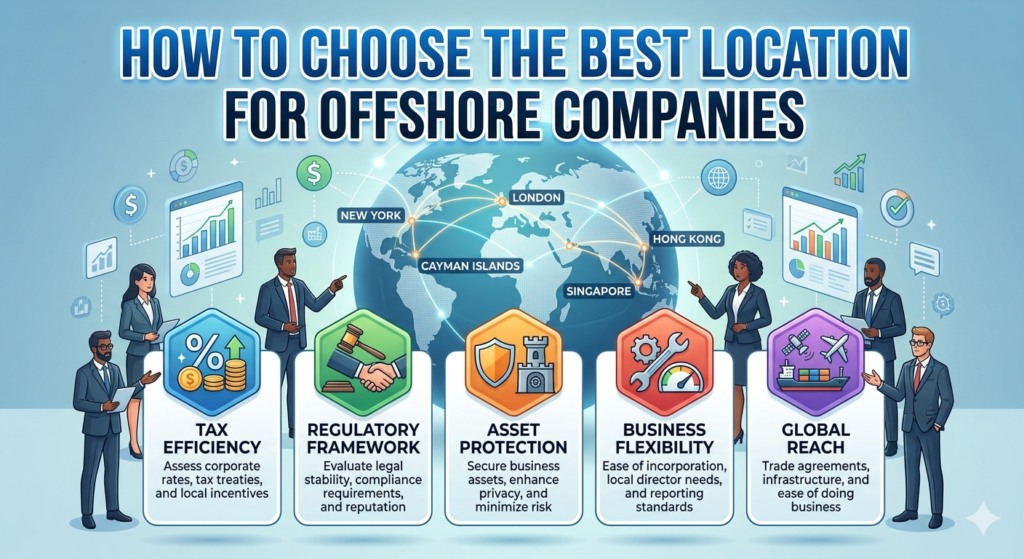
Selecting a jurisdiction for offshore company formation is one of the most consequential decisions a business owner can make. It isn’t just about finding a “tax haven”; it’s about aligning a legal framework with your operational needs, long-term goals, and reputation.
While many jurisdictions offer similar perks, the nuances in their legal systems can significantly impact your bottom line. This guide breaks down the roadmap to selecting the right offshore destination.
1. Define Your Primary Objective
Before looking at a map, you must identify your “North Star.” Different jurisdictions specialize in different financial “products.”
- For Intellectual Property (IP) Protection: If you are holding patents or trademarks, look for jurisdictions with robust legal frameworks that shield IP from litigation.
- Examples: British Virgin Islands (BVI) or RAK (UAE) are renowned for their modern IP laws.
- For Global Trade & Logistics: If your business involves moving physical goods, you need a hub with world-class infrastructure and extensive trade agreements.
- For Asset Protection & Privacy: If your goal is to shield wealth from frivolous lawsuits or maintain high levels of confidentiality.
- Examples: The Cayman Islands, Belize, and The Cook Islands are global leaders in statutory asset protection.
2. Evaluate the Regulatory Environment
A “low tax” jurisdiction is useless if it is “blacklisted” by international bodies like the OECD or FATF. Doing business from a blacklisted location can make opening a corporate bank account nearly impossible.
- Economic Substance Requirements: Ensure you understand if the jurisdiction requires you to have a physical office or local employees (common now in places like Bermuda and BVI).
- Reporting Standards: Are you looking for a “zero-filing” jurisdiction (like Seychelles) or a highly regulated, prestigious hub (like Hong Kong or Ireland)?
3. Analyze Tax Treaties and Fiscal Impact
The goal isn’t always “zero tax,” it’s tax efficiency.
- Double Taxation Agreements (DTAAs): These treaties ensure you aren’t taxed on the same income in two different countries.
- Withholding Taxes: Check if the jurisdiction charges tax on dividends or interest sent back to your home country.
4. Critical Questions for Your Shortlist
When evaluating a specific location, run it through this checklist:
| Question | Why it Matters |
| What is the “Time-to-Market”? | Some locations take 48 hours to incorporate; others take 6 weeks. |
| Is a Local Director required? | Jurisdictions like Singapore require at least one resident director, which increases costs. |
| What is the Banking Landscape? | Can you easily open a multi-currency account for a company registered there? |
| What are the Audit Requirements? | Some locations require annual audited financial statements, while others only require internal records. |
Comparison of Popular Offshore Jurisdictions
| Jurisdiction | Best For | Key Advantage |
| Singapore | Tech & Trading | High prestige, stable government, 17% corporate tax. |
| BVI | Holding Companies | Flexible corporate laws, no corporate or wealth tax. |
| Cayman Islands | Investment Funds | Neutral tax environment, sophisticated legal system. |
| Delaware (USA) | Startups/SaaS | Best for VC funding and US market entry. |
Conclusion: Making the Move
There is no “one-size-fits-all” offshore destination. The “ideal” location is the one that balances tax efficiency with global credibility and ease of operation.
Navigating international law can be taxing, both literally and figuratively. Partnering with an expert like BSSGlobal ensures that your incorporation is compliant, fast, and strategically sound. Our associates handle the complex “math” of international regulations, allowing you to focus on scaling your business.
Ready to take your business global? Contact BSSGlobal today for a tailored consultation.